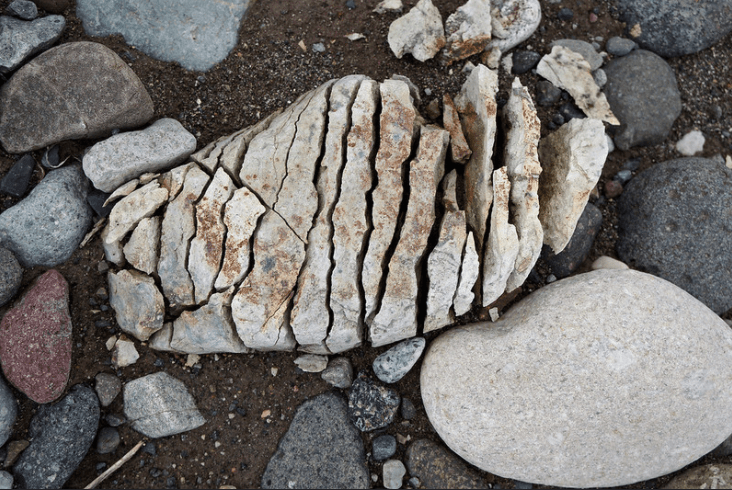
“Which of you, if your son asks for bread, will give him a stone?”
Matthew 7:9
Jesus’ words are an appeal to common sense. None of us in our right minds would consider filling our kid’s lunchbox with rocks. Rocks are antithetical to nourishment and thriving. They are lifeless. They coincide with the landscape of desolation.
If we would never consider serving rocks to our own children for dinner (or to anyone else for that matter) then how do we explain the barren, wasteland, desert paths that God gives us? It sure feels like the meal He serves is laced with stones. It is full of suffering and despair, along with a side of disappointment. For many, it comes in courses of oppression, marginalization, abuse, poverty, and brokenness. In the end, we lose the appetite for life itself and we wonder, “God, why so many rocks? Why such disease? Why such restrictions in the midst of our Covid world? Why so much depression, sorrow and death?”
These questions are intimidating. If God is good, then how could He allow us such desolation? So, we sugarcoat pain in platitudes. We subvert honesty with quick answers. We assume Christianity is clean, so we tie the loose ends of our broken experience and call it “good.” We weaponize the phrase, “But, God provides everything we need” to defend our breeched theology, as though orthodoxy and suffering cannot coincide. In the end, all we have really done is subverted and isolated the broken in their moment of honesty and need.
I wonder whether those who have weaponized the statement, “But, God provides everything we need” have ever considered what we actually need. When we think of being provided for and having enough, we often think monetarily. But if we’re honest with ourselves, most of life revolves around securing things that we never needed to begin with.
We talk about how “blessed” we are as though God’s “blessings” are a dime-a-dozen. But we don’t realize Abraham’s blessing meant he had to leave his home to live in tents the rest of his life. For him, it meant being a wanderer, never seeing the full picture of what was happening in his life. It’s easy to miss that Mary’s blessing looked like immorality and shame to her time and community, being an unmarried pregnant woman. When we say we’re “blessed” are we just saying we’re “happy” and “well off”? Are we just saying that life is how we want it to be?
God does give “good gifts to those who ask Him.” And He is “able to do far more abundantly than we ask or think.” And yet just because He is able, it doesn’t mean it will look the way we expect. It doesn’t mean it coincides with the kind of “happy” we are looking for. This December, our firstborn son, Asa, would have been eight-years old. Back in 2012, we had asked God for a healthy baby, but we received a broken body. His death was not a good gift. And in no way was that moment more abundant than we could have asked for. Our son’s death was desolate to us. It’s a rock. God gave us a rock…
It’s likely that you have rocks in your life. Maybe it was an experience of loss, death, or disappointment. Maybe you have known tarnished hopes and dreams. Undeniably, we live in a world of rocks now. The plight of so many who have experienced prejudice and injustice is undeniable. The fallout from a global pandemic is unmissable. What do we do with all of these rocks?
In the Old Testament, God’s people wandered in desolation for years and years without seeing God’s promises fulfilled. In both Exodus and Numbers, these people are coming to the brink. They are angry, seeing slavery to Egypt as better than wandering through a desert. At the heart of this agitation is their thirst for water; they are parched. Moses then takes his staff and strikes a rock, causing water to flow out. This rock became their source for water. There was no opportunity for water unless the desolation of rocks were transformed into springs.
Many of us too have wandered through desolate lands, thirsty and hungry but surrounded by rocks. We have been frustrated and angry and we want to know what it means for God to provide us what we need. Unbeknown to us, provision has come through the back door… It has come in the form of a rock.
One rock in particular was the symbol and setting for all rocks. It was large and round and it rolled, sealing off a lifeless, beaten, abused, and bloodied man to forever lay dead. This man was laid behind the stone, utterly conquered. Jesus was dead. The promise and provision of God was broken in the minds and hearts of Jesus’ followers. And let us not skip over this rock that God had given. Let us not dismiss it, but see it standing firm for three days. The rock indicated that there may be no hope in this world after all. Let us know the pain and heartache, tasting the rock that Jesus was buried behind. God gave His own son a rock… and that rock became the bread.
As Christians, we participate in the sacrament of the Lord’s Supper. It’s a meal to nourish us wholly. But in order for that bread and wine to nourish us and enliven us, it must first point us back to the rock. For what does the bread mean but death? And the wine is a symbol of blood. Jesus’ body was laid behind a stone so that His broken body would be, to us, nourishing bread. When rocks are served us in life, we can know that they were served to Jesus too. When rocks hold us down, we can know they entrapped Jesus too. But the rock meant more than death; the rock was about being made alive again. Without the rock, resurrection is unnecessary. All these rocks in life are an opportunity to experience again and again the resurrection of Jesus. The rocks in our lives, they can be resurrected. They can become our bread.
So, if it’s true that God “provides everything we need”, then He must have meant something broader and deeper. He must have meant something pertaining to what we actually need. God does provide, especially in ways we don’t expect: God is our provider and our provision.
We all are invited to join Him at the table.
 In Written Form
Wonderfully written about pain and suffering, the “rocks” in our lives that all point to Jesus, who died for us.
LikeLiked by 1 person
This is so well written! AnnieB clapped at the end cause I was reading it aloud.
LikeLiked by 1 person
Beautifully said! He is and provides all we truly need.
LikeLike
Thank you, Joy!
LikeLike