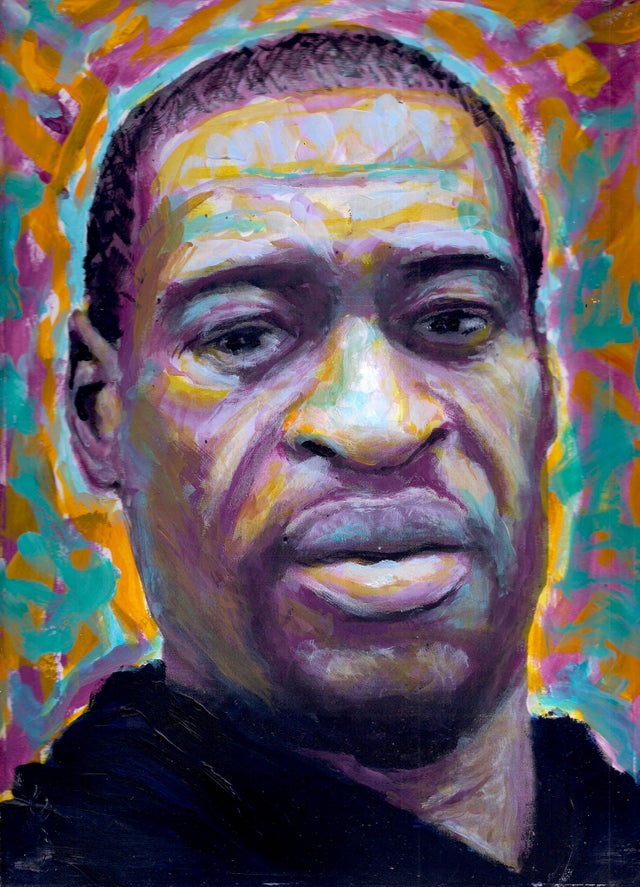
[Note to the reader: If you don’t read the whole thing, you will miss the point]
In downtown Chicago, the 66 bus runs from the brilliant Magnificent Mile at Michigan Avenue westward. Michigan Avenue is known for its pristine sidewalks, designer stores and breathtaking views of city skyscrapers. But along the course of the 66 bus you go deeper and deeper into the concrete abyss that makes up most of Chicago. And that’s where I lived: in the concrete abyss. The 66 bus was my daily routine.
On one occasion after work in the deep freeze of winter, I squeezed onto the 66 and went into my post-work “daze.” Unbeknownst to me, my “daze” meant that I was staring straight at the eyes of a very large black man. His deep voice broke my mental fog, “What, you never seen a black man before?” Quickly I redirected my sight. I felt a wave of awkward tension wash over me. My mind stirred restlessly. I felt misunderstood. I wanted to defend myself.
But I considered his question… “Had I seen a black man before?” As we were both subject to the turns and jerks of the bus, I wanted to respond:
“Well actually, the funny thing is I have seen a black man before. Like a lot of them. I’ve seen hundreds of black men before. And black women and kids too. In fact, I grew up in a black neighborhood in Maryland amidst the city sprawl of Washington D.C. But I recognize that I look as white as they come.
“One of my best friends growing up was a girl named Shanice. She was black. Every time I visited, she gave me toys as a kind token of friendship. Our race didn’t matter much then.
“Like Shanice’s family and many others in our neighborhood, we had a “broken” home. My dad left us when I was four years old. And he left me with my earliest memories: insults, arguments and hurt. But yeah, I get it… I’m white. So, you wouldn’t assume that.
“You probably wouldn’t assume either that my neighborhood was the product of white flight. Whites left as public housing moved in. But we stayed. It was our home. But it’s funny, my family had been there for 40 years and when I used to visit after moving away, neighbors would look at me like I didn’t belong there. A bunch of teens would hang out on the sidewalk near our house. But when I came through, they would look at me with animosity. I didn’t belong in my own neighborhood. The neighborhood that I grew up in didn’t accept me. ‘You and I don’t belong together in the same neighborhood… nor the same bus… nor the same world.’ At least, that’s what their eyes told me.
“I’m hurt that you assume I see you like a zoo animal on display, a moment’s novelty. That seeing you, one of the most basic things that makes us human, is a threat.
And yet, maybe I don’t. Maybe I don’t see you.
“As a child, I always thought we were the same. When did we divide? When did we take sides? When did society dictate for us that we were separate? I guess I never really understood that our histories began before we were even born. Advantage and disadvantage were distributed without our permission.
“I never really understood that our histories began before we were even born. Advantage and disadvantage were distributed without our permission.”
“And so, you wonder if I’ve ever seen a black man before… You know, maybe I haven’t. Maybe I’ve never noticed just how different we really are. I grew up in a black neighborhood with friends that I loved, but I was given a passport to transcend oppression and disadvantage. For too long, I have read my own experience into your lives.
“White people often say, ‘Well, my life is hard too! You couldn’t imagine what I came from!’ And while that may be true, you my friend, face a different kind of hard. Never has my white face been a hindrance to my life’s ambitions. Never has my white face barred me from adoration or applause. Never has my white face stoked fear in me as I walk down the street. Never have I felt subjected to the scrutiny of eyes that are supposed to protect me.
“Now our country is in turmoil. Each headline of broken windows and burning buildings shatters my spirit. I mean, is this the right way to fight and protest? And yet if it shows anything, it reveals that order and peace can never exist when races and ethnicities are marginalized and stepped on. And maybe order and peace shouldn’t exist in a world where God’s image is suffocated.
“When white people say, “All lives matter,” we step on you again; we shatter you again. We are marginalizing your cry for dignity and justice. As a platitude all lives do matter, but not all lives are choked.
“…all lives do matter, but not all lives are choked.”
“I had always thought the real America – the true and ideal America – was the America for everyone. The America that embraced the marginalized and oppressed from the four corners of the world, no matter their culture, race, religion, or socioeconomic upbringing. But how can that be our America when we can’t even embrace our own people?
“So, my friend. I am sorry. I want to embrace you. I want to see you. I want to know you and be behind you, even if I can’t fully understand…”
I wanted to respond because he was human. I wanted to respond because he was beautiful. I wanted to let him know that I did see him… I wanted him to know that I could see Black.
God, give us eyes to see what we are blind to. Give us hearts to know reality and undermine assumption. You have made us all in Your image and yet we are enemies of your vision of dignity. God, may we know our role in this degradation. Make us to know both the worth of Your children, and the shackles that undermine that worth. And teach us to lament, as Alan Paton lamented:
Cry, the beloved country, for the unborn child that’s the inheritor of our fear. Let him not love the earth too deeply. Let him not laugh too gladly when the water runs through his fingers, nor stand too silent when the setting sun makes red the veld with fire. Let him not be too moved when the birds of his land are singing. Nor give too much of his heart to a mountain or a valley. For fear will rob him if he gives too much.
Amen.
 In Written Form
Phenomenal writing. You truly capture the racial disparities in our nation and personalize it well through the eyes of a person who has not had the barriers that a Black person in America has had to overcome. Powerful ending, Tim. I hope many people will have the opportunity to read this during this time.
LikeLiked by 1 person
Thank you, Marge. I appreciate your kind words.
LikeLike
Tim,
Thank you very much. I have been so troubled by the things I have seen and heard of late. This post gives me hope that more people will think about these things. I reached out to a Black friend of mine last week to let him know I had no idea how it felt be judged as the people of color have been, that all I can do is try to help in some way, but wasn’t sure how to. He told me that things just like you posted help. So thank you…
LikeLiked by 1 person
Thanks, Terry. It’s not always a clear path forward …but I believe connecting with these types of friends is an invaluable step forward.
LikeLike
Thank you Tim. You have a way with words to move and challenge us.
LikeLiked by 1 person
Hi Nancy. Thank you for reading.
LikeLike
Thank you for your words!
LikeLiked by 1 person